

You Are Using Your Washing Machine Wrong: Common Habits to Avoid
By Fixr Technologies ·
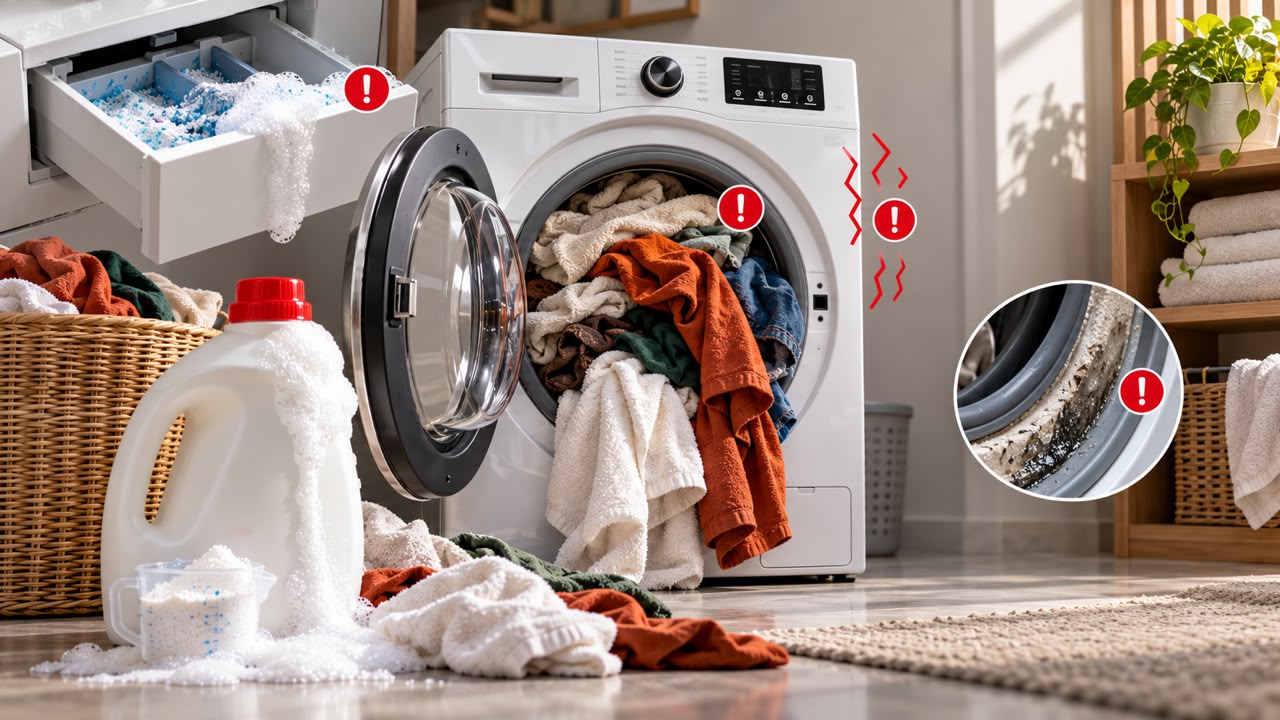
In most homes, the washing machine is an essential part of the weekly routine. It saves time, takes care of piles of laundry, and makes one of those household chores a lot less stressful.
But what if the way you use it is slowly damaging it?
You don't notice because it still comes on, fills with water, spins and gets through a wash cycle, so you assume everything is fine.
Then one day, it stops working and naturally, the manufacturer gets the blame.
But before you start looking for the warranty card, let's take a look at some of the common washing machine mistakes you might be making.
Because some of the things you do to get more laundry done or make your clothes “extra clean” can actually put more stress on the machine and give you worse results at the same time in terms of cleaning.
Two of the biggest culprits? Overloading the machine and using too much detergent.
They sound harmless. They’re actually not.
How Full Should a Washing Machine Be?
Now, one of the easiest ways to put unnecessary stress on your washing machine is to overload it.
So, how full should a washing machine be?
A good rule of thumb is to fill the drum to about three-quarters full. You should still be able to fit your hand comfortably between the clothes and the top of the drum. If you have to push, squeeze or press the clothes down just to get the door or lid closed, the machine is probably too full.
And no, having a 7kg, 9kg or 12kg washing machine doesn't mean you should cram it with clothes until there’s no space left. That number refers to the maximum weight of dry laundry the machine is designed to handle, not how tightly you can pack the drum.
The clothes need room to move around during the wash cycle. When you overload a washing machine, they can't tumble properly, which means water and detergent don't circulate through the load as they should. That's one reason clothes can still not come out fully cleaned even after a full wash cycle.
Overloading can also create an unbalanced load, causing excessive shaking and vibration during the spin cycle. Over time, that extra strain can affect parts such as the motor, drum bearings and suspension system.
So if your washing machine is vibrating excessively, making loud noises, struggling to spin or stopping during a cycle, don't automatically assume the machine is faulty. Check how much you've put inside it first.
Moving on.
How Much Detergent Should You Use?
This is another common washing machine mistake: assuming that more detergent means cleaner clothes.
Well, it doesn't.
So, how much detergent should you use in a wash cycle? There isn't one amount that works for every wash. It depends on the detergent you're using, the size of the load, how dirty the clothes are, the hardness of your water and the type of washing machine.
For example, you might come across recommendations of around two tablespoons of detergent for a normal load. That's an example, not a universal rule. The instructions on your detergent and washing machine should always come first.
The problem starts when you start pouring detergent like it equates to cleaner clothes.
So what happens if I use too much detergent?
Using too much detergent can create excessive suds, make it harder for the machine to rinse properly and leave detergent residue on clothes. You might notice white streaks, clothes that feel stiff or crunchy, or even a lingering smell on the clothes after washing.
Too much detergent can also leave residue inside the machine, especially around areas that stay damp. Over time, that buildup can contribute to the musty washing machine smell people often notice.
And if you're seeing too many suds in your washing machine, don't assume that's a sign that the detergent is working better. Sometimes, it simply means you've used more than the machine needs.
The goal isn't to use as much detergent as possible. It's to use enough detergent to clean the load properly without leaving all that extra soap behind.
Other Washing Machine Mistakes You Might Be Making
Overloading the drum and using too much detergent aren't the only washing machine mistakes that can shorten the life of your machine.
Ignoring unusual noises or excessive vibration is another one.
If your washing machine suddenly starts shaking violently, making loud banging sounds or struggling to spin, don't just let it continue running.
Skipping regular cleaning can also become a problem.
Detergent residue, dirt and moisture can build up around the drum, detergent drawer, door seal and other parts, which can lead to a musty washing machine smell and affect how clean your clothes come out.
And then there's the habit of ignoring small problems until they become big ones.
A machine that isn't draining properly, keeps stopping mid-cycle, leaks water or refuses to spin is already telling you something is wrong.
Sometimes, the best way to avoid expensive washing machine repairs is to pay attention or stop these habits before it becomes a big problem.
In conclusion, your washing machine isn't necessarily failing because it’s a bad machine.
Sometimes, it is just down to how we use it.
So the next time your clothes aren't getting clean, the machine is vibrating too much, or you're dealing with a washing machine smell, don't immediately reach for the warranty card.
Check the simple things first.
Are you overloading the machine? Are you using more detergent than you actually need? Have you been ignoring that strange noise or vibration for weeks?
But if the machine is actually faulty, don't keep forcing it to work or start taking random parts apart. Get a professional to take a look before a small fault turns into an expensive washing machine repair.
And if you need help with that, Fixr can sort you out.
Need a Fixr engineer?
Fixr installs and maintains solar, AC, CCTV, electrical, fibre and smart home systems across Nigeria. See solar plans and prices or contact the team nearest you.