

Common Solar Misconceptions
By Fixr Technologies ·
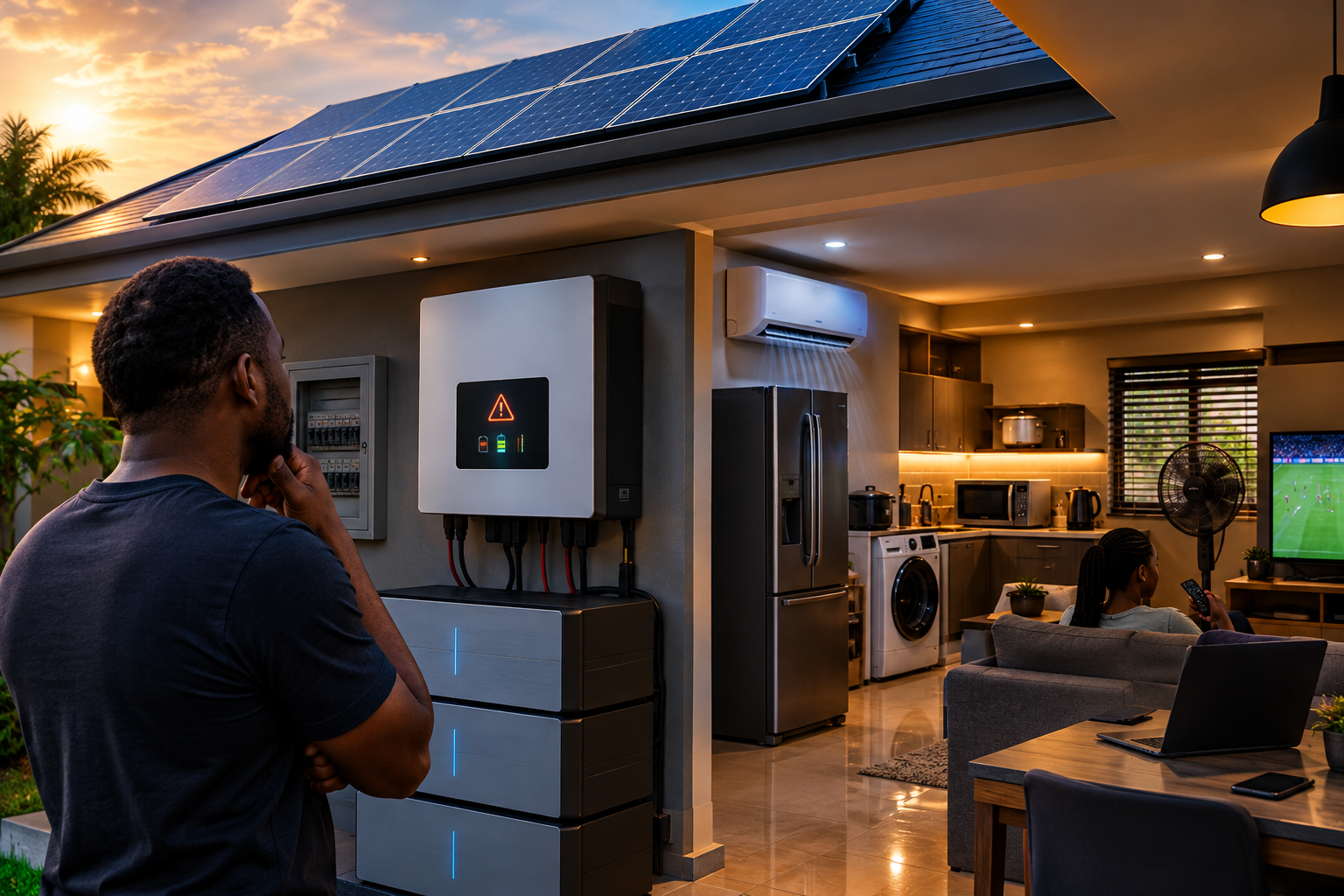
One of the most common things we hear about solar is this: "Install it once, and you're done."
Bye bye to electricity bills. Bye bye to noisy generators. Bye bye to the ever rising fuel prices. And finally no more maintenance headaches. Just clean, reliable energy for years to come.
It's an appealing idea, and to some extent, it's understandable.
Unlike generators, solar panels have no moving parts, and modern systems are built to last a very long time. Many quality solar panels even come with performance warranties of 15 years or more, which speaks to their durability.
But somewhere along the line for many solar users, "low maintenance" becomes "no maintenance," "energy independence" becomes "unlimited power," and "long-lasting" becomes "nothing can go wrong."
That's where expectations begin to drift away from actual engineering reality.
The truth is, solar remains one of the smartest investments a home or business can make. When properly designed, installed, and managed, it can significantly reduce reliance on the always failing grid, lower energy costs, and provide dependable power for years.
The problem though isn't the technology though, it's the expectations.
Many of the frustrations people experience with solar aren't caused by the system itself. They're caused by common misconceptions about how solar works, what it can realistically do, and what it needs to perform at its best.
So, before you conclude that your solar system is underperforming, let's separate four of the most common myths from the actual realities behind them.
Myth #1: "Solar Eliminates Electricity Problems Forever."
One of the most common misconceptions about solar is that once it's installed, electricity problems become a thing of the past.
Well, that’s true in part. But the full picture is a bit different.
Every solar system is designed around what's known as a load profile.
Engineers don't simply count how many solar panels can fit on your roof. They calculate how much electricity you use, when you use it, and which appliances or equipment your system needs to power. That information is then used to design a solar system that matches your expected energy demand.
For instance, imagine your daily energy consumption is around 18 to 20 kWh, and your peak demand falls within the capacity of a 5 kVA hybrid inverter. After assessing your load profile, backup requirements, and available sunlight, an engineer might recommend a solar system built around a 5 kVA hybrid inverter, with approximately 5 to 6 kWp of solar panels and a battery bank sized to provide the backup time you need.
What this means is the system wasn't designed at random or worse guessed. It was carefully sized to match your electricity needs at the time of installation, not every appliance you might decide to add months or years later.
Now imagine that six months later, you add two 2.5 HP air conditioners, an electric water heater, a second refrigerator, and some other heavy appliances, without reviewing the system design.
Your energy demand has changed significantly, but your solar system hasn't.
The resulting effects could be, shorter backup time, frequent inverter overloads causing trippings and shutdowns, batteries that discharge faster than expected, and a system that appears to be "underperforming" when in reality, it's simply being asked to do more than it was originally designed for.
That doesn't mean solar has failed.
It means your energy needs have evolved, and your solar system needs to evolve with them, so there is a balance.
So the misconception is expecting one system to meet every future energy need without adapting or redesigning as those needs evolve.
And that naturally leads to another misconception, one that's responsible for countless overloaded inverters and disappointed solar users.
The belief that once you have solar, you can power virtually anything without giving a second thought to how much electricity your appliances actually consume.
Myth #2: "If I Have Solar, I Can Power Anything."
It's easy to assume that once your home or business is powered by solar, every appliance is fair game. After all, the sun is shining, the batteries are charged, and everything seems to be working.
Once again, that's not quite how solar works.
Every solar system is designed with a maximum amount of power it can safely deliver at any given time. This is where a concept known as load management becomes important.
What this means is, it's not just about how many appliances you own, it's about how many of them are running at the same time and how much electricity they consume.
For example, a typical electric kettle can consume between 1,500 and 2,200 watts, while a 1.5 HP air conditioner may require roughly 1,100 to 1,700 watts depending on its efficiency and operating conditions. Add a microwave, water dispenser, refrigerator, lighting, and other appliances into the mix, and the total demand can rise surprisingly quickly.
Now imagine a system built around a 5 kVA inverter.
The inverter can only supply a certain amount of power at one time. If the combined demand from your appliances exceeds that limit, the inverter may overload, shut down temporarily, or trigger protective mechanisms designed to prevent damage.
This is why even after engineers ask, "How many appliances do you have?" They go on to ask, "Which appliances will be running at the same time?"
The detail may seem small, but it can completely change how a solar system is designed and how it performs in everyday use.
Solar isn't about having unlimited electricity.
It's about having a system that intelligently manages the electricity available to it. And the businesses and homeowners who understand that tend to get far more from their investment than those who don't.
But even when a solar system is correctly sized and properly used, there's one more assumption that often makes the rounds.
Myth #3: "If the Lights Are On, Everything Is Working Perfectly."
A solar system doesn't have to stop working to start underperforming.
Engineers sometimes refer to this as performance degradation or performance drift.
In other words a solar system can gradually produce less energy over time without showing any obvious signs of failure. Everything may appear normal, the lights still come on, appliances still work, but the system may no longer be operating as efficiently as it should.
For perspective, most modern solar panels are designed to lose only a small fraction of their power output each year, which is why many manufacturers comfortably provide up to 15-year performance warranties. So if a system's performance drops noticeably within just a few years, the cause is often something else, such as dirt buildup, shading from new trees or buildings, inverter issues, or other system faults.
In summary, a working solar system isn't always a well-performing solar system. Monitoring its performance regularly helps identify small issues before they become expensive ones
And once you understand that, the final misconception becomes much easier to see.
Myth #4: "Solar Doesn't Need Maintenance."
It's true that solar systems require far less maintenance than fuel-powered generators. But “low maintenance” doesn't mean “no maintenance”.
Like any engineering system exposed to the elements, solar installations benefit from routine inspections and preventive maintenance.
For example, dust, leaves, bird droppings, and even newly formed shade from growing trees can reduce the amount of sunlight reaching your solar panels like we mentioned when we broke down the previous myth.
What this means is your panels may generate less electricity, not because they're faulty, but simply because they're not receiving as much usable sunlight as they should.
It's not just the panels that deserve attention. Inverters, batteries, electrical connections, and mounting structures should also be inspected periodically to ensure they're operating safely and efficiently.
The goal of maintenance isn't to fix what's broken.
It's to identify and address small issues before they affect your system's performance, shorten the lifespan of key components, or lead to unnecessary repair costs.
Now, understanding how a solar system works is only part of the equation. Getting the best performance from it requires thoughtful system design, quality installation, and ongoing engineering support, because the best solar investment isn't necessarily the one with the most panels, it's the one that's properly designed, intelligently managed, and consistently performing at its best.
Finally, great solar systems aren't built by chance. They're built on accurate assessments, thoughtful design, quality installation, and the right engineering support long after the panels are installed.
That's the approach we take at Fixr Technologies.
From energy assessments and system sizing to professional installations, preventive maintenance, and performance checks, our goal is to ensure every system continues delivering the reliability and value it was designed for.
Whether you're installing a new system, expanding an existing one, or simply want to ensure it's performing as efficiently as it should, we're here to help.
Need a Fixr engineer?
Fixr installs and maintains solar, AC, CCTV, electrical, fibre and smart home systems across Nigeria. See solar plans and prices or contact the team nearest you.