
DIY Electrical Repairs: What Could Go Wrong
By Fixr Technologies ·
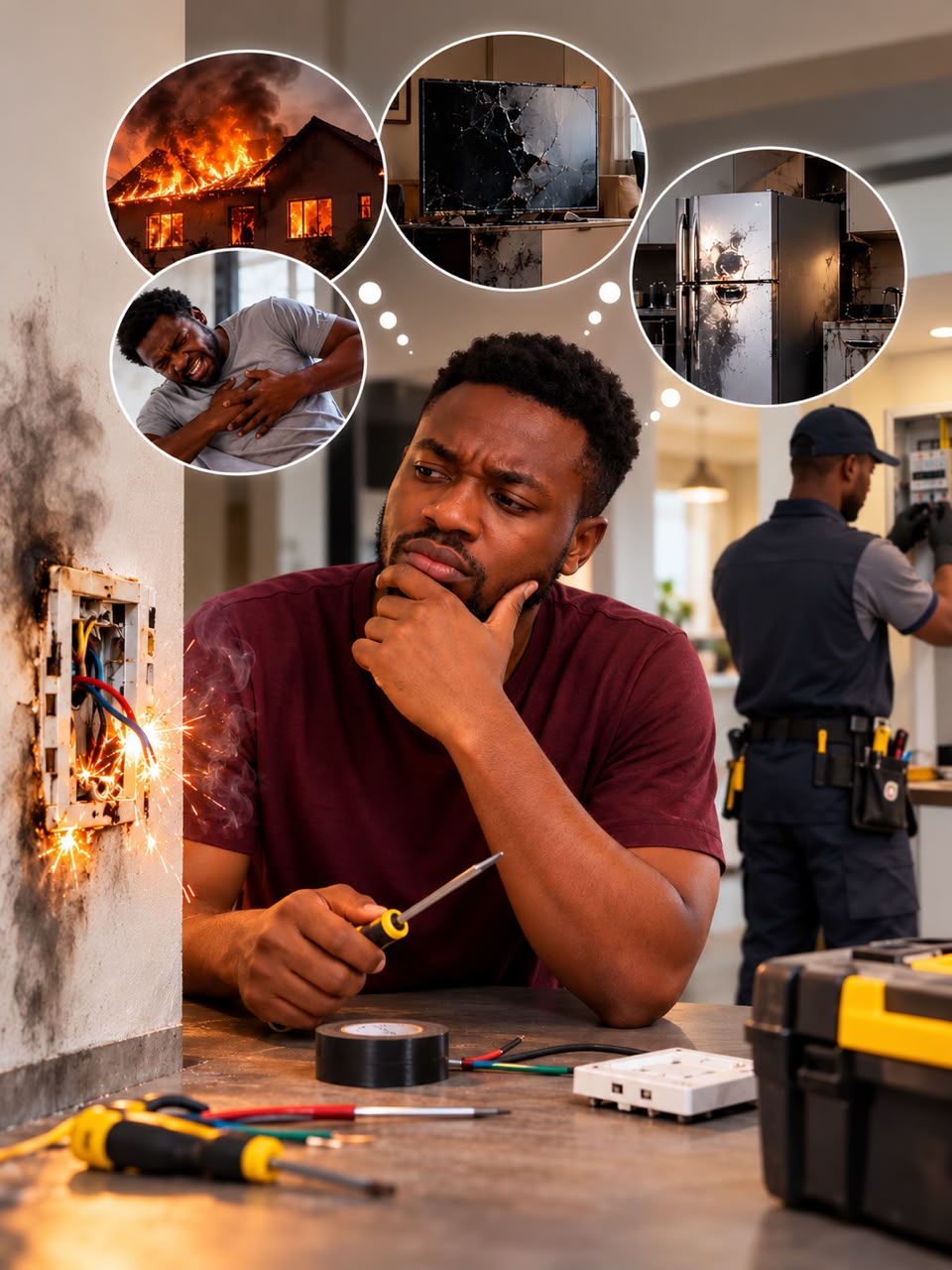
At first glance, a faulty socket doesn't look like a big deal.
Neither does a loose wire, a flickering light switch or a circuit that suddenly starts acting up. And when an electrician tells you the repair will cost ₦X or ₦Y, it is easy to think, “I can probably fix this myself.” A quick YouTube tutorial, a screwdriver, some electrical tape and you're ready to go.
Except there's a catch.
What if the fault you're looking at isn't actually the fault you need to fix?
That loose connection could be heating up somewhere you cannot see. That faulty socket could be a symptom of a much bigger electrical wiring problem. And the wire you're about to touch? You may not even know if it is still carrying current.
One wrong connection during a home electrical repair can turn a minor repair into a damaged appliance, a serious electric shock, or a fire that doesn't stop at the socket you were trying to fix.
And that's exactly the part most DIY electrical repairs tutorials don't show you.
And the consequences are not theoretical.
In 2025, the Federal Fire Service recorded 1,866 fire incidents across Nigeria, resulting in 114 fatalities and about ₦74.75 billion in property losses. Nearly 70% of those fires were linked to electrical-related issues, including power surges, overloads and wiring faults.
For context, three separate fires in the FCT within just 32 hours earlier this year caused more than ₦650 million in property damage, with electrical surges and wiring problems identified among the contributing factors.
That puts the “I'll just fix it myself” approach into perspective. The few thousand naira you hoped to save fixing an electrical fault can look very different when the alternative is a damaged appliance, destroyed property or, in the worst case, a fire outbreak.
The risk to you
Then there is the risk that could be fatal for you personally: The risk of electric shock
Property is one thing. Your safety is another. And when it comes to electrical repairs at home, electric shock is one risk you really don't want to learn about the hard way.
Now, It is easy to think of electricity as dangerous only when you see a large spark or exposed cable. In reality, you may not know that a circuit is still energised until your body becomes the path the current takes. And this is a major risk associated with DIY.
The danger of an electric shock is increased by the amount of current passing through the body. At relatively low levels, an electrical shock can cause painful muscle contractions and make it difficult to let go. As the current increases, the consequences can become far more severe, including breathing problems, heart disturbances and potentially death.
And the conditions around you can make things worse. Wet hands, damp floors or damaged insulation can increase the risk of current passing through your body.
That YouTube tutorial may show you exactly where to put the screwdriver, but it definitely doesn't tell you if the electrical system in your home is safe to work on.
So what should you do when something electrical starts acting up?
First, don't keep using it just because it still works. A socket that is sparking, unusually hot, making a buzzing sound or producing a burning smell is already giving you a reason to stop.
If a circuit keeps tripping, stop resetting the breaker hoping it goes away either. The repeated trip is a warning that something is wrong, not an inconvenience to work around. And if you notice exposed wires, scorch marks, melted sockets or damaged insulation, leave the repair alone. Switch off the affected circuit if you can do so safely and get a qualified professional to inspect it.
The same goes for anything beyond a simple household task. If you're opening a socket, replacing damaged wiring, tracing a fault or trying to figure out why an appliance keeps tripping the circuit, this is where calling an electrician makes more sense than guessing your way through it.
A five-minute YouTube video can show you what to do. It cannot inspect the wiring in your house for you.
Now, none of this means you need an electrician every time a light bulb stops working.
There are simple household tasks you can handle yourself. The problem starts when the issue at hand involves electrical wiring, opening sockets or switches, modifying a circuit, diagnosing repeated faults or working with anything you are not completely sure about.
The point is to stop experimenting around systems you do not understand fully.
Understandably the temptation is real. Nobody actually wants to spend money calling an electrician for something that looks like a five-minute job.
But compare that cost with what you could end up paying if the repair goes wrong: a damaged refrigerator, television or air conditioner; burnt wiring that needs to be replaced; property damaged by an electrical fire; or even worse an electric shock, and ask yourself the big question. Is saving the cost of a professional really worth the risk?
If you cannot answer that question confidently, the screwdriver and tape should probably go back in the toolbox.
With Fixr, you can get help from vetted professionals for electrical repairs and maintenance, without having to guess your way through the problem yourself. Sometimes, the smartest DIY decision is knowing when to call a professional.
Need a Fixr engineer?
Fixr installs and maintains solar, AC, CCTV, electrical, fibre and smart home systems across Nigeria. See solar plans and prices or contact the team nearest you.