

Washing Machine Drainage Problems: Causes and Checks
By Fixr Technologies ·
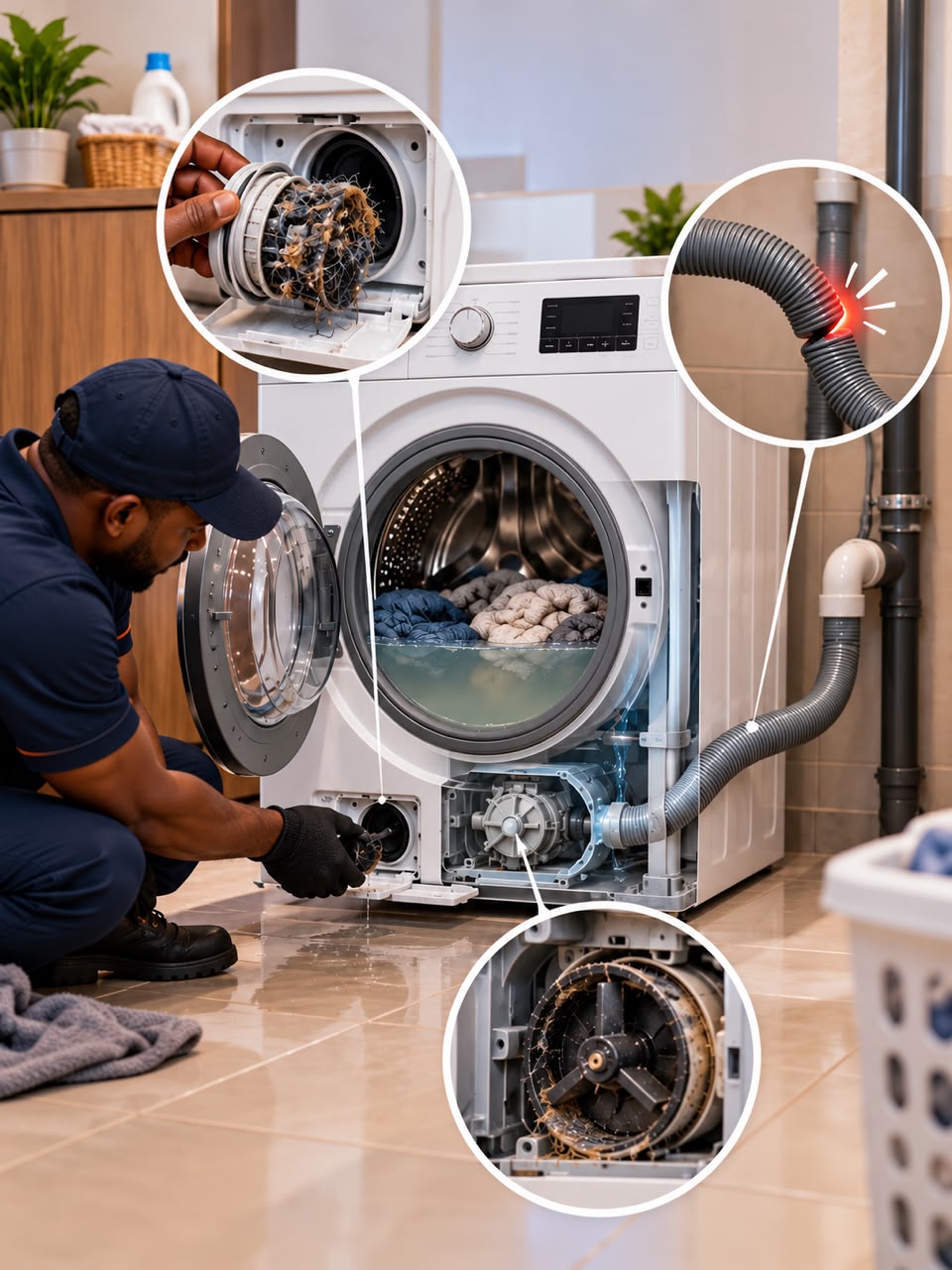
You finish a wash, open the machine, and there’s still water sitting inside.
You run the drain cycle again. The water doesn’t move an inch.
Then the machine makes a strange humming sound. Or the water drains slowly. Or maybe the washing machine doesn’t drain at all.
Before you assume the machine is finished, the problem could be much simpler.
Washing machine drainage problems can come from a clogged filter, a blocked washing machine drain hose, or even an issue with the drainage point in your home.
So, what could actually be causing it?
What Could Be Causing the Problem?
A washing machine doesn't stop draining for just one reason.
One common culprit though is the washing machine filter, usually located behind a small flap at the bottom front of the machine. Lint, hair, loose threads, hairpins, and other small things left in pockets can collect there and restrict the flow of water.
The washing machine drain pump, usually found near the bottom of the machine, can also become clogged or develop a fault. You may hear the machine trying to pump the water out while the drum still remains full.
Then there's the plumbing.
The drain hose at the back of the machine carries used water away. It can become bent, twisted or squeezed behind the machine, restricting the flow.This is what is often called a “kinked” hose, and it can restrict the water from flowing out properly.
The hose may also empty into a floor drain, standpipe or another drainage outlet.
So now the problem isn't always inside the machine. Sometimes, it's where the machine is trying to send the water.
What Should You Look Out For?
You don't need to open up the machine to notice that something isn't right. It will usually give you a few clues.
Water remaining in the drum after the cycle is one of the clearest signs. The machine has finished washing, yet the water isn't leaving properly.
Then there's slow water drainage. Instead of the drum emptying normally, the water takes much longer than it should. This can happen when something is restricting the flow through the filter, hose, pump or drain.
You might also hear a humming or unusual pumping noise while water remains inside. That could mean the pump is trying to drain the machine but something is preventing the water from moving out.
And if the machine repeatedly stops around the draining stage, that's another sign worth paying attention to. Some models will stop the cycle when they cannot drain properly.
When Should You Call a Professional?
If the problem keeps coming back, the machine is leaking, the pump isn't working, or it continues to leave water behind, it's time to have it checked properly.
The same applies when the obvious external issue isn't clear. A washing machine drainage fault could involve the pump, internal wiring, a blockage or the connection to your home's plumbing and these are not faults you can rectify all by yourself.
Washing machines combine water, electricity and moving components, so randomly removing parts or attempting repairs without knowing the cause can create a bigger problem.
A professional washing machine technician can trace the problem from the machine to the drainage outlet and determine what actually needs attention.
Get Your Washing Machine Working Properly Again
A machine that won't drain doesn't automatically mean you need a new one.
Sometimes the issue is a blockage. Sometimes it's the drainage connection. Sometimes a component has failed.
The important thing is knowing which one you're dealing with.
Our professional technicians at Fixr can inspect your machine, identify the cause and carry out the necessary washing machine servicing and repair.
So when your washing machine refuses to drain, don't just keep restarting the cycle and hoping for the best.
Find out what's actually stopping it.
Need a Fixr engineer?
Fixr installs and maintains solar, AC, CCTV, electrical, fibre and smart home systems across Nigeria. See solar plans and prices or contact the team nearest you.