
Solar Installation Mistakes That Can Affect Performance, Safety and Lifespan
By Fixr Technologies ·
“Since I installed my solar system, it has been one issue after the other.”
Honestly, this can be one of the most frustrating complaints to have after spending good money on solar installation.
The system is supposed to give you reliable power, yet every single time you're dealing with low output, overheating, battery problems, unexpected shutdowns or components failing sooner than they should.
And while it's easy to point fingers at the panels, inverter or battery, the problem may have started long before any of them developed a fault.
It is important to note that the warning signs can start quietly. A cable running hotter than it should. A panel losing output to afternoon shade. A battery sitting in an unsuitable space. Or a mounting point slowly allowing water into your roof.
None of these necessarily mean you bought bad equipment. They can come from mistakes made while the system was being installed.
And that's what makes solar installation mistakes easy to overlook. By the time you notice something is wrong, you're no longer dealing with a simple installation issue. You're dealing with poor solar system performance, damaged components, solar installation safety risks, or a system that isn't lasting as long as it should.
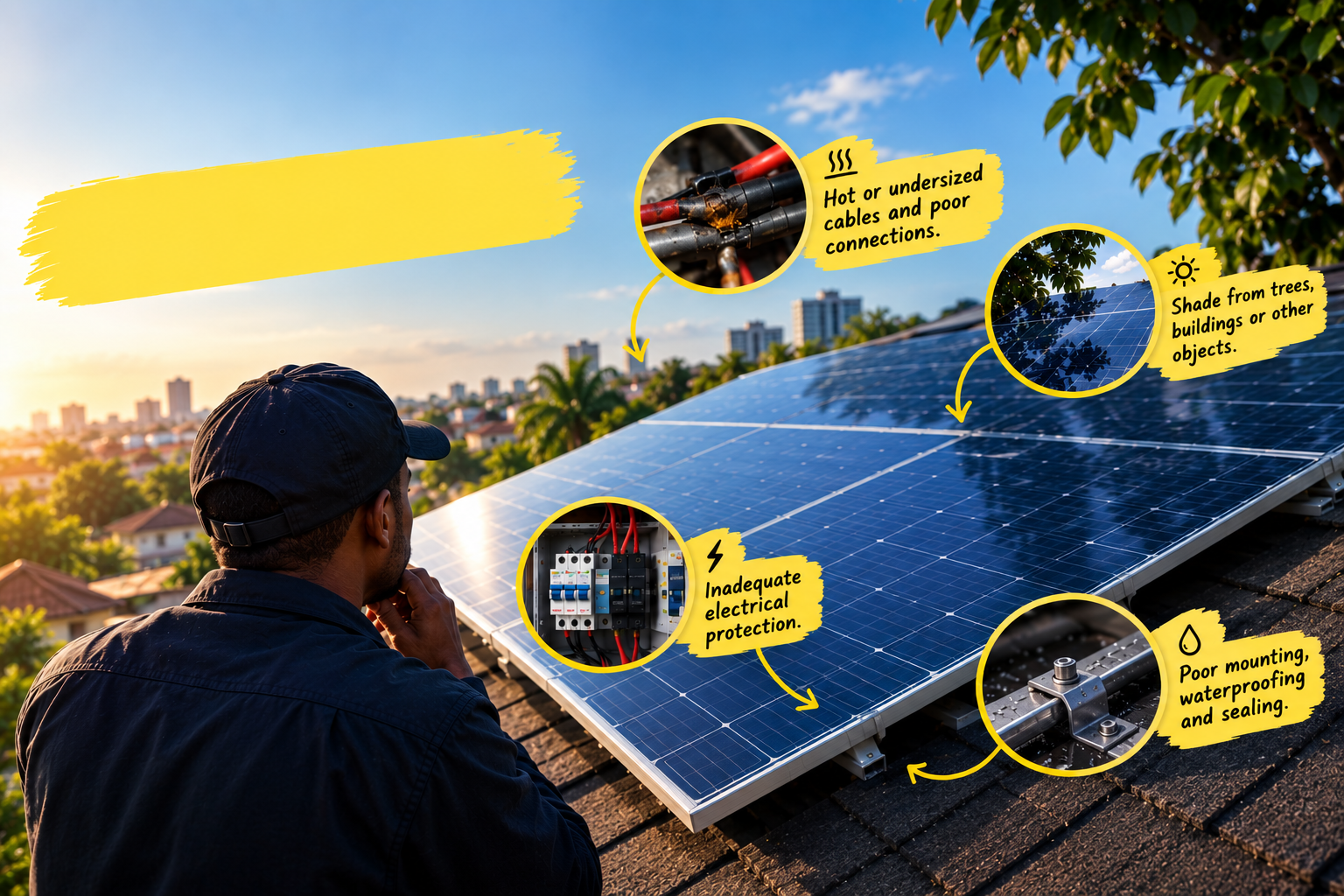
The good news is that most of these problems can be prevented. Here are four common solar installation mistakes worth knowing.
1. Wrong Cable Sizing and Connections
When the solar cable sizing is wrong, for example, when a cable is too small for the amount of electricity passing through it, the cable can become excessively hot. That heat can damage the cable's protective covering and, over time, affect other parts of the system.
The same problem can happen when a cable connection is loose or hasn't been tightened properly. A poor connection can generate heat, waste energy and make the system perform below what you expected.
So, don't be afraid to ask your solar installer how much electricity the cables are expected to carry and what cable size is being used. Asking for the information gives you something to check and helps you understand whether the wiring being used is appropriate for your system.
2. Ignoring Shade Around the Panels
Solar panels need sunlight to produce electricity, so where you install them matters. Trees, nearby buildings, water tanks and other objects can cast shadows over the panels and reduce the amount of electricity they produce.
The tricky part is that a roof may look completely clear in the morning and have shadows covering part of the panels later in the day. Even partial shading can affect solar panel performance, depending on how much of the system is shaded and where the shadow falls.
Before your solar panel installation, ask the installer to check for possible sources of shade throughout the day. That way, you can choose a better position for the panels and get more from your solar system.
3. Inadequate Electrical Protection
A solar system carries a lot of electricity, and things can go wrong even when the equipment itself is good. That is why solar electrical protection matters.
For example, imagine a fault causes more electricity than expected to flow through part of the system. Without the right protection, that excess current can overheat cables, damage the inverter or battery and, in serious cases, start a fire.
This is where breakers, fuses and surge protection come in. They help protect different parts of the system when there is a fault or a sudden increase in voltage.
Earthing works differently. It provides a safe path for unwanted electrical current to flow into the ground during a fault, helping reduce the risk of electric shock and equipment damage.
So don't just ask whether your installer included these protections. Ask what each one does and what part of the system it protects. Understanding this can help you spot gaps in solar installation safety before they become expensive problems.
4. Poor Mounting, Waterproofing and Final Checks
Your solar panel installation should involve more than simply fixing panels to the roof. The mounting structure needs to hold them firmly in place and handle strong winds and changing weather. Poorly installed mounts can leave panels unstable or put unnecessary stress on the roof.
Then there's the roof itself. When installers drill or create openings to secure equipment, those areas need to be properly sealed. Poor roof waterproofing can allow rainwater into the roof and cause damage that has nothing to do with the panels themselves.
Before the installer leaves, the system should also be properly tested. Solar system testing can help identify faulty connections or components early, giving you a chance to fix them before they become expensive repairs. These checks can protect your system's lifespan and long-term reliability.
A good solar installation is about more than getting the system switched on. The small details can determine how safely your system operates, how well it performs and how long it lasts.
At Fixr, we help homeowners get these details right, from professional solar panel installation to proper electrical protection, testing and ongoing solar system maintenance.
So before you sign off on your installation, ask questions, understand what is being installed and make sure the work is done properly.
Need a Fixr engineer?
Fixr installs and maintains solar, AC, CCTV, electrical, fibre and smart home systems across Nigeria. See solar plans and prices or contact the team nearest you.