

I Spent a Lot on Solar. Why Am I Still Having Power Problems?
By Fixr Technologies ·
I Spent a Lot on Solar. Why Am I Still Having Power Problems?
You finally made the switch to solar, after years of unreliable power supply.The generator doesn't run every night anymore and you now worry less about the rising costs of fuel. Your electricity bills are even starting to make more sense.
For a while, it feels like money well spent. And of course it is!!
Then, gradually, the problems start.
The battery isn't lasting as long as expected. Certain appliances still have to be switched off.
The inverter starts beeping when you need it most. Somehow, the generator and fuel costs you thought you were free from, is back in the picture.
You spent a lot on solar. So why are you still having power problems?
The uncomfortable truth is that buying a solar system is not the same as having a solar system that is properly designed for the way you use power.
The problem may not be the solar panels
Solar systems are often judged by how much they cost or how many panels were installed. But the truth is, neither tells you how well the system will perform.
What matters is whether the system was designed around how you actually use electricity.
A home running a refrigerator, several air conditioners, a water pump, television, lighting, and other appliances has a very different energy demand compared with a smaller household. Also a business with computers, cooling systems, equipment, and extended operating hours can have an entirely different profile.
That is where system design becomes important.
Here's how it works
Your solar panels generate power. The inverter converts and manages that power for your appliances. The batteries store energy for periods when there is little or no solar generation. Each part has to work together and match the demands placed on the system.
A system can have plenty of panels and still struggle to meet your needs. That's because the battery may not provide enough usable backup. The inverter may not be suited to the appliances running at the same time. Your actual electricity consumption may also be higher than what the original system was designed to handle.
In other words, the problem may not be that you didn't spend enough on solar. You may have spent money on a system that wasn't properly matched to your energy needs.
Where it went wrong
Picture this.
You installed solar to solve a problem. Your generator was becoming expensive to run, the grid was unreliable, and you were tired of planning your day around unstable electricity.
Now the installation is completed. The panels are on the roof, the inverter is running, and the batteries are fully charged.
For a while, everything works as expected.
Then your electricity needs change.
You start using the air conditioner for longer. The children spend more time at home. You add a freezer. Someone starts working from home. Your business gets busier and other appliances are added to the load.
In this case, the solar system hasn't necessarily developed a fault. Your power needs have simply changed.
Now the battery that once lasted through the night starts running low before morning. The inverter may begin to struggle when several heavy appliances run together. You find yourself switching things off just to stretch the remaining battery power.
Eventually, the generator makes its way back into the routine.
This is one of the reasons a solar installation should not be viewed as a one-time purchase. Your energy consumption matters just as much as the equipment installed.
The system that was adequate for your home two years ago may not be adequate for the way you use electricity today.
Sometimes the problem becomes obvious when you look at what happens during a typical day.
You wake up and the battery is already lower than expected. The system worked through the night, yet the backup time keeps getting shorter. That could point to a battery that is no longer holding as much usable energy as it should.
Then the afternoon arrives. The sun is out, the panels are producing power, yet the inverter starts struggling when the air conditioner, refrigerator, water pump and other appliances are running together.
Perhaps you added another air conditioner, bought a larger freezer, started working from home or expanded your business. The system may have been correctly designed for your original load. Your current load is a different story.
Even the way the system was installed matters. Poor connections, unsuitable components or an installation that does not properly match the system design can affect performance over time.
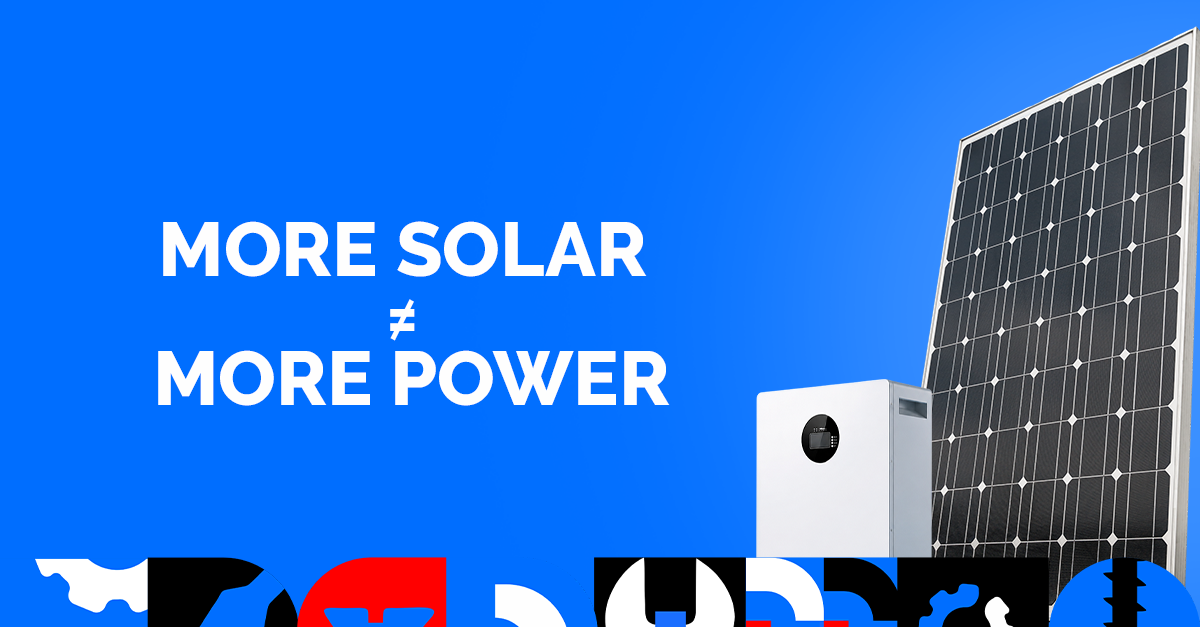
This is why adding more panels or buying a bigger battery is not always the answer.
First, you need to know what is actually causing the problem.
Before you spend more money, find the problem.
The first instinct when a solar system starts underperforming is often to buy more equipment or to just self diagnose and check the wires.
More panels. A bigger battery. Perhaps even a larger inverter. Or a self diagnosis of the cables
That may solve the problem in the short term. It may also leave you with a more expensive system that still does not perform as expected.
Start with a proper assessment of the system. Look at your current power consumption, the condition of the batteries, the inverter's capacity, the energy being produced by the panels and how the entire system is configured.
The goal is to find the gap between what the system is designed to deliver and what you actually need from it.
Once that gap is clear, the solution becomes much easier to determine. You may need additional battery capacity. You may need to adjust how certain appliances are used. Your batteries may need attention. In some cases, the original system may need to be redesigned or upgraded.
The important thing is to diagnose first.
You shouldn't have to keep spending money on solar equipment hoping the next upgrade will finally fix the problem.
A solar system should not leave you guessing why the power keeps running out.
At Fixr, the starting point is understanding what the system is doing and what you actually need it to do. That means looking beyond a single component and assessing the system as a whole.
Our team can assess the installation, review your energy needs, check the condition of your batteries and inverter, and identify where the system may be falling short.
Sometimes the solution may be maintenance or a simple adjustment. In other cases, the system may need additional capacity or a more suitable configuration.
The point is to solve the actual problem rather than simply add more equipment.
That is why we are the bridge between simply buying more solar equipment and having a solar system that is properly designed around the way you live and use power.
So, if you have invested in solar and still find yourself relying on your generator, it may be time to find out what is actually causing the problem.
Reach out to our team at usefixr to assess your solar system and find the right solution for your energy needs.
Need a Fixr engineer?
Fixr installs and maintains solar, AC, CCTV, electrical, fibre and smart home systems across Nigeria. See solar plans and prices or contact the team nearest you.