

CCTV Camera Placement: The Blind Spots Homeowners Often Miss
By Fixr Technologies ·
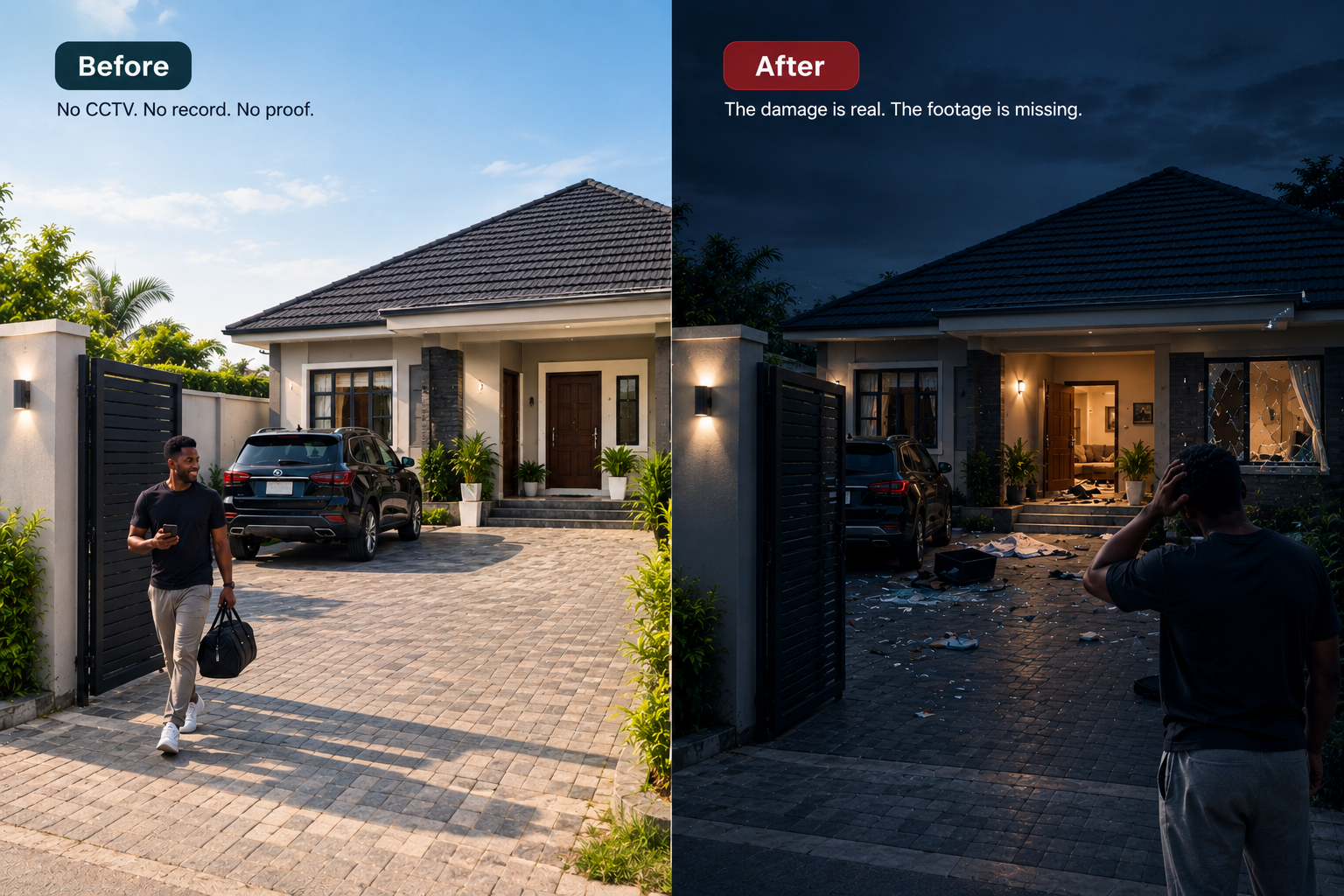
You can have many CCTV cameras around your house and still have someone walk onto your property without being properly captured.
Sounds impossible, right?
You paid for the cameras. They are installed around the house. You can even check the live feed from your phone. So how can there still be a blind spot?
It comes down to one simple term: CCTV camera placement.
What this means is, a camera can be working perfectly and still give you a poor view of an important area. It could be pointing too high, facing the wrong direction, blocked by a wall, or simply missing the part of the property where you actually need visibility.
Good CCTV installation isn't just about putting cameras around the building. It is about understanding the property and positioning each camera where it can actually see what matters.
Start With the Property, Not the Camera
Before deciding where your security cameras should go, walk around the property first.
Look at the places someone would naturally use to get in or move around the compound. The main gate. The pedestrian entrance. The driveway. The sides of the house. The backyard. Those narrow spaces between the fence and the building that you probably don't pay much attention to.
After doing that, ask yourself: Can I clearly see someone moving through this area?
That question can completely change how you approach security camera positioning.
For example, a camera above your front door might give you a good view of whoever walks up to the entrance, yet completely miss someone coming from the side. Another camera may show you everything happening on the driveway while leaving the pedestrian gate out of view.
Both cameras are working, but you still have a gap.
So instead of starting your home surveillance system by asking, “Where can we put the cameras?” Start with, “Which parts of this property actually need to be seen?”
Once you know that, you can work out where each camera needs to go, thereby eliminating blindspots.
Check the Sides and Back of the House
The front of the property usually gets the most attention. The gate has a camera. The driveway has one. The front door may have another.
The sides and back? Not always.
Those narrow spaces between the house and fence can become CCTV blind spots, especially when walls, pillars, roof edges or trees block the view. Someone can still use these spaces to move around the property without being properly captured.
When installing outdoor CCTV cameras, check where someone would actually walk and make sure the camera has a clear line of sight along that route. Don't just point the camera at the side of the house and assume the area is covered.
The backyard shouldn’t be left out too. Look at back doors, windows, service areas and other points someone could approach from behind. Your security camera angles should give you enough visibility to see both the person and the route they are taking towards the house.
Test the Coverage Before You Need It
Once your CCTV camera system is installed, don't stop at checking whether the live feed works.
Take another walk around the property yourself.
Try the routes someone could use to approach the house. Check what appears on the footage and what doesn't. Pay attention to security camera angles, obstructions and areas that disappear from view. Then adjust accordingly.
Your home surveillance system should be designed around the property, not around the number of cameras you can fit onto it.
That's what Fixr helps homeowners and businesses do. We plan and install CCTV systems around the areas that actually need to be seen, rather than simply adding cameras wherever there is space. Because with CCTV, more cameras don't automatically mean better protection.
Knowing where they need to go does.
Need a Fixr engineer?
Fixr installs and maintains solar, AC, CCTV, electrical, fibre and smart home systems across Nigeria. See solar plans and prices or contact the team nearest you.