

Beyond The Blackouts: Why Nigerians Keep Paying For Electricity Twice
By Fixr Technologies ·
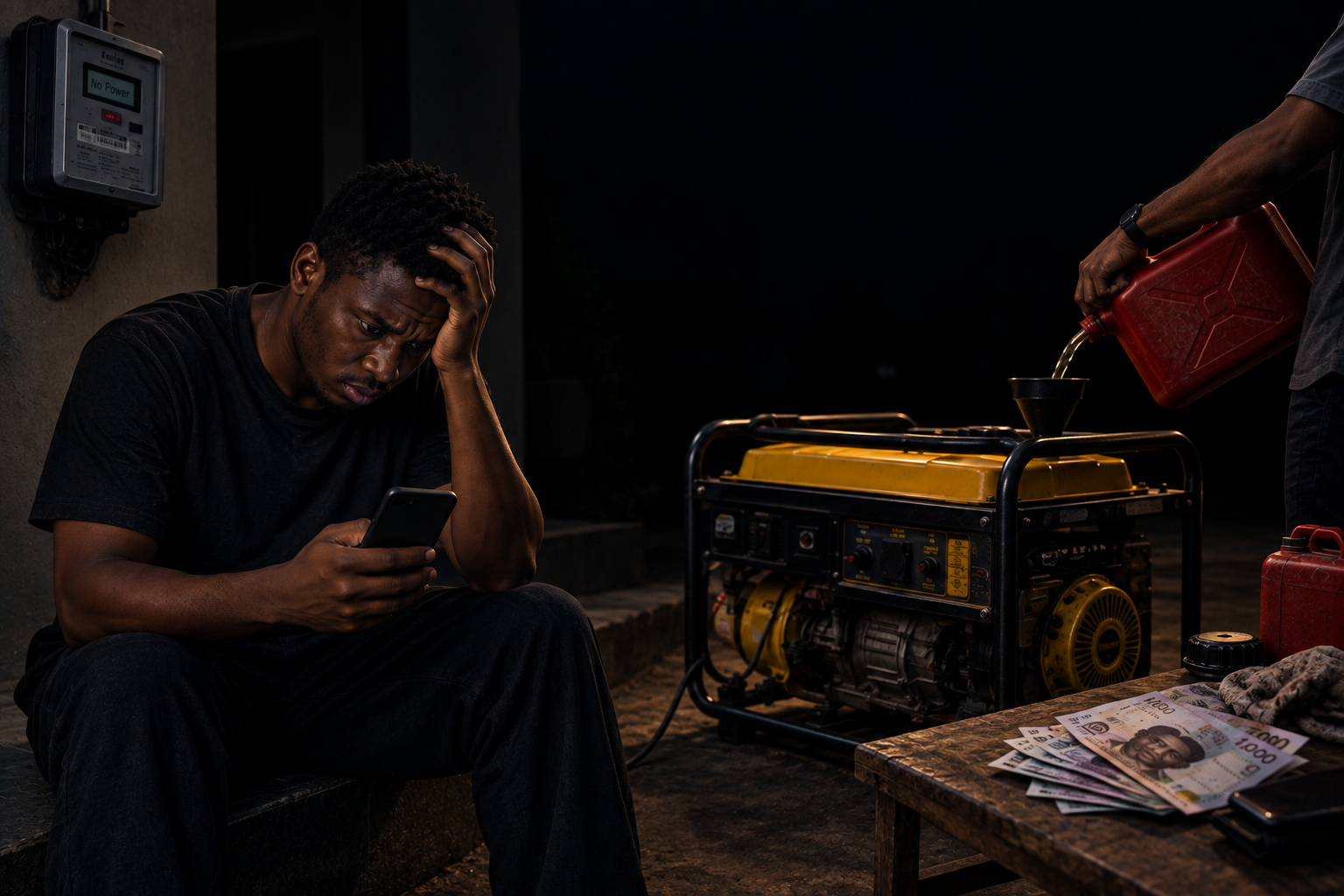
It’s 8pm. The power is out again.
You paid your electricity bill or you just bought new units of electricity just a few days ago. Now you're about to stand in line for fuel, spending even more money just to get the lights back on.
And tomorrow, you might do it all over again.
This is the reality of the power situation in Nigeria. You don't just pay for electricity. You also pay for what happens when that electricity isn't there.
For millions of Nigerians, that means generator fuel, maintenance, repairs and other backup power solutions just to keep homes comfortable and businesses running.
So how much are we really spending to keep the lights on?
And more importantly, what if we're effectively paying for electricity twice?
The Cost of Keeping the Lights On
The scale of Nigeria’s power supply problem becomes clearer when you look at what businesses are spending just to keep operating.
In the first quarter of 2026 alone, 24 companies listed on the Nigerian Exchange spent ₦400.83 billion on alternative energy, including diesel, fuel, gas and other self-generated power.
Take a minute to think about it. This is money that could have gone into expanding businesses, hiring more workers, buying equipment or lowering operating costs. Instead, a significant amount is being spent on backup power because businesses cannot afford to simply stop operations whenever power is out.
And the cost isn't limited to the fuel bill.
The African Development Bank has highlighted how power outages create additional costs for businesses through lost production, idle workers, damaged equipment and other disruptions.
For a Nigerian business, unreliable electricity can therefore create a double financial burden: money spent generating power and money lost when there isn't enough power to keep operations running.
That is what makes unreliable electricity in Nigeria more than an inconvenience. It becomes an operating expense.
The Generator Bill
For the average Nigerian household, the cost of fuel for generators can become a permanent part of the household expenditures. And with the cost of fuel continuously on the rise, these costs are never fixed.
For example, take a small 1.5-2.5kVA generator. If it burns roughly one litre of petrol an hour and you run it for four hours every night, that's about 28 litres of fuel every week.
At ₦1,200-₦1,300 per litre, you're spending roughly ₦33,600-₦36,400 every week just to keep the generator running.
That's already a lot of money.
But if you're running a larger 7.5-10kVA+ generator for a home, office or business, the numbers get even harder to ignore. At roughly 3-4 litres an hour, four hours every night means about 84-112 litres of fuel every week.
That's roughly ₦100,800-₦145,600 every week at the same fuel prices.
And billing doesn't end there. There's engine oil, servicing, repairs, replacement parts and those moments when the generator decides not to start when you need it most.
This is what unreliable electricity in Nigeria can look like in real life. You pay for electricity from the grid, then spend more money creating the electricity you actually need.
And for many Nigerians, that second payment has become so normal that we barely stop to question how much it is costing us.
The business angle
For a business owner, the fuel bill is only part of the problem.
Think about what happens when the lights go off in the middle of the workday.
A customer is ready to pay, but the POS is down. Your staff can't get online. A freezer stops running. Customers walk into a hot shop and decide not to stay. Work that should have taken an hour suddenly takes three.
You eventually start the generator and get things moving again, but you haven't really escaped the cost. You've already spent money on fuel, and you've potentially lost money while your business was sitting idle.
The African Development Bank estimates that electricity outages cost Nigerian businesses around 3% of annual sales.
That's a different kind of expense.
You're paying for fuel and maintenance to keep things running, while also dealing with the sales, productivity and opportunities that disappear when your operations are interrupted.
And this is why reliable power for businesses matters. It's not just about keeping the lights or air conditioner on. It's about being able to serve your customers, keep your staff productive and run your business without constantly wondering when the next interruption will happen.
When does this end?
It gets to a point where you have to stop and really ask yourself: when does this end?
How come I already have a backup power source, but even that backup is unreliable?
You buy fuel, service the generator, fix it when it breaks down, and still have to worry about whether it will actually start when you need it.
That's where solar power in Nigeria starts to make a lot more sense. Instead of depending on fuel every time the grid goes down, you can use the sun to generate and store your own electricity, giving you a more predictable source of backup power without the constant fuel bill.
But the challenge with solar power in Nigeria isn't always deciding whether it makes sense. For many people, it's finding a way to pay for the system without putting too much pressure on their finances at once.
That's where Fixr's Zero Interest Power Starter Solar Package comes in.
You pay an initial 20% deposit, get your solar system, and spread the remaining balance over six months with zero interest.
No need to wait until you've saved the full amount before you start enjoying more reliable power.
And when you think about how much you're already spending on generator fuel every week, it becomes worth asking whether that money could be going toward a better solution.
You’re always going to need electricity. The question now is: how much longer do you want to keep paying for constant problems instead of investing in a solution?
Need a Fixr engineer?
Fixr installs and maintains solar, AC, CCTV, electrical, fibre and smart home systems across Nigeria. See solar plans and prices or contact the team nearest you.